
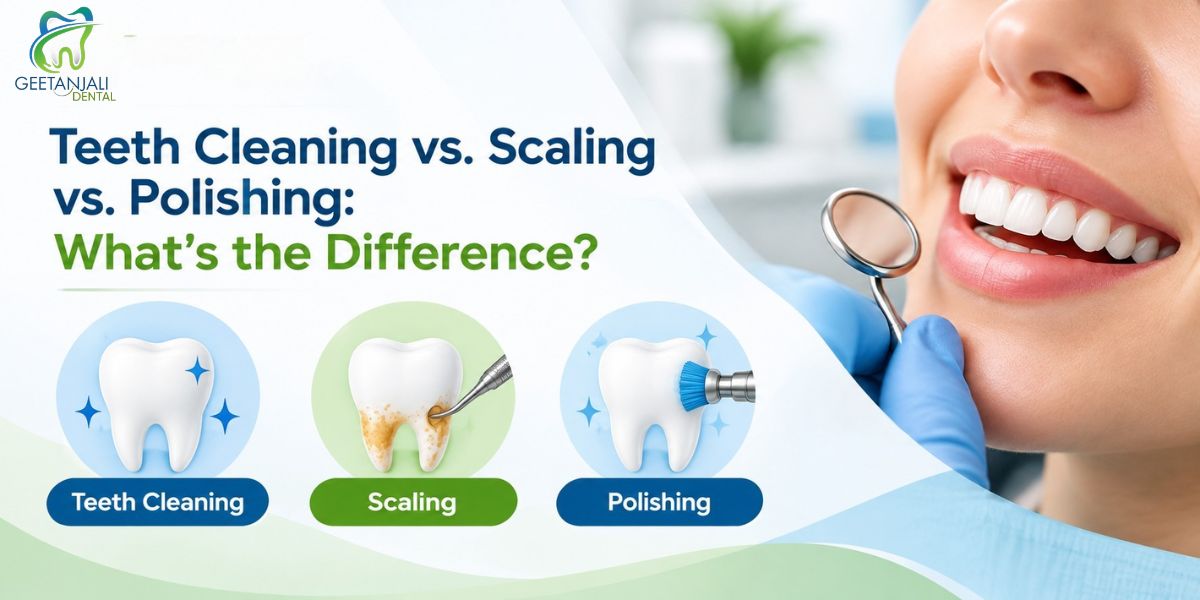
Are you familiar with going to the dental clinic for a teeth-cleaning procedure and encountering words like scaling and polishing along the way? Of course, there is always a tendency to think that the three processes are one and the same, especially considering that they go hand in hand most of the time. However, it would be known that teeth cleaning, dental scaling, and tooth polishing are different processes but are performed in one dental appointment. Thus, teeth cleaning is meant for the removal of any plaque; teeth scaling is done to deal with the hardened substance of tartar or calculus, while teeth polishing has to do with the smoothness of the tooth surface after cleaning. Knowing the difference helps you understand the full treatment process. We, at Geetanjali 32 Dental Clinic, provide dental treatments for kids, teenagers, and adults.
What Is the Difference Between Teeth Cleaning, Scaling, and Polishing
Talking about professional cleaning, we mean the process of removal of the plaque, deposits, and other buildup that cannot be completely removed by brushing the teeth. Nevertheless, dental scaling is something different and means the removal of calculus, which has formed and stuck to the teeth, especially to their part near the gum line. The process of teeth polishing comes after the process of cleaning or scaling and smooths the surface of the teeth and removes some of the surface stains. These processes usually go hand in hand, but they do not replace each other. First of all, we examine your teeth and gums and select the proper type of cleaning for you.
What Does Professional Cleaning Involve
It is essential to brush your teeth twice a day; however, this is usually not enough in order to provide a good cleaning. The plaque could stick under the gums or between the teeth, in any other place where it would be hard to remove. When dentists clean teeth, they remove plaque using special dental tools and monitor the condition of teeth and gums. This is an excellent chance to discuss problems, such as plaque that is not coming out, bad breath, bleeding gums, discolored teeth, etc. Our clinic provides every patient with a comfortable dental visit with the help of modern equipment and detailed explanations.
When Is Dental Scaling Needed
It becomes necessary once plaque hardens into calculus, or tartar. Unlike soft plaque, calculus cannot be simply removed by brushing, no matter how carefully a person tries to do at home while brushing their teeth. Scaling will help us remove all hard deposits from the surface of the tooth, even from places that are nearer to the gums. We use proper instruments, including ultrasonic instruments, to remove calculus. If someone feels rough deposits on their teeth, more specifically near the gum area, a dental checkup can help us determine the need for scaling.
How Does Teeth Polishing Help After Cleaning
The tooth polishing process is done after cleaning and removal of hard deposits. This helps to ensure that tooth surfaces become smooth, and some of the stains that are acquired through activities are also polished away. It is clear that your teeth will feel smooth when you touch them with your tongue. Polishing will not remove the hard tartar, however. This is where dental scaling becomes necessary. It is the process of removing tough deposits on teeth. You can see scaling as the removal of tough deposits and polishing of clean tooth surfaces.
Teeth Cleaning vs Scaling vs Polishing: How Do They Compare
The most effective way to understand the procedure is to observe what each method does. The quantity of plaque, tartar, staining, and gum-related buildup all play a key function in figuring out what your teeth require.
- Teeth Cleansing: We use professional cleaning to remove plaque deposits that remain after everyday brushing and flossing.
- Dental Scaling: It help getting rid of hardened tartar or calculus that has connected itself firmly to the tooth surface.
- Tooth Polishing: It smooths the tooth surface after cleansing and allows cope with positive outside stains.
- Plaque Removal: Soft plaque is simpler to remove than hardened calculus; that is why everyday cleaning becomes necessary.
- Tartar Removal: Once plaque turns into calculus, specialized equipment is required to dispose of it efficiently.
- Surface Smoothing: After deposits are eliminated, polishing offers your enamel a purer and smoother surface.
Understanding these steps helps you understand what our dentist is doing and why we perform multiple steps in the same appointment.
What Happens During a Professional Dental Cleaning Appointment
The initial part of a professional cleaning begins with an examination to ensure that we get an idea about how the situation is around the teeth and gums. If there is only plaque and some amount of buildup, then regular cleaning should do. If there is any tartar buildup, then dental scaling is also added to the procedure. Polishing the teeth comes after that in order to make sure that all the deposits have been dealt with. We also try to find out the level of care you give to your teeth on a regular basis. This is why people visiting a dentist for “cleaning” might receive different procedures during their appointments.
What Are the Benefits of Regular Teeth Cleaning and Dental Scaling
Regular dental cleaning is not only about making your enamel look cleaner before an event or special occasion. There are numerous motives why professional cleaning matters.
- Cleaner Teeth: Professional cleansing receives rid of buildup from regions which can be difficult to clean properly with a toothbrush.
- Gum Care: Removing deposits along the gumline supports more healthy conditions and lets us assess gum-associated issues.
- Smoother Surface: Polishing allows the tooth to feel smoother once plaque and calculus are addressed.
- Better Oral Hygiene: Professional cleaning works alongside daily brushing and flossing to support them.
- Regular Monitoring: Dental appointments help make modifications to your teeth and gums.
At Geetanjali 32 Dental Clinic, we provide quality dental care. We use contemporary equipment, hygiene, and clear communication so that sufferers get a better experience.
How Often Are Cleaning, Scaling, and Polishing Recommended
There cannot be any standard schedule that works for everyone since it entirely depends on whether one needs professional cleaning according to their oral hygiene, the build-up of plaque or calculus, the condition of gums, and previous problems with teeth. Some people form calculus faster than others, while some individuals manage not to have much build-up by regularly brushing and flossing. In general, we advise regular check-ups and cleanings at approx six months, which usually work for most of our clients. Your schedule for visits will depend on the results of the examination.
What Dental Services Are Available at Geetanjali 32 Dental Clinic
A dental visit is not usually limited to cleaning because your examination might reveal some other situation that deserves attention. Our offerings cover specific levels of dental care, so you can get familiar with appropriate treatment according to your dental needs.
- Teeth Cleansing: We offer professional cleaning to help remove plaque and buildup that regular home care leaves behind.
- Dental Calculus Elimination: We remove hardened tartar using appropriate dental devices and ultrasonic gadgets.
- Periodontics: We offer care targeted at gum health and worries affecting the tissues, helping your teeth stay strong.
- Root Canal Treatment: We deal with problems concerning the pulp and root canals while working to preserve the natural enamel.
- Dental Implants: We offer implant solutions for patients who require an alternative to a missing tooth.
- Cosmetic Dentistry: We provide cosmetic treatments that address issues such as chipped, stained, or crowded teeth.
Having these services in one place means you do no longer have to treat every dental care need as a separate adventure. We can assess your wishes and guide you towards the appropriate solution.
Understanding the Right Dental Cleaning Procedure
Although teeth cleaning, scaling, and tooth polishing are similar terms, they are not identical that describe the same thing. The term cleaning describes the process through which the buildup in the form of plaque on the teeth is removed. Scaling describes the process through which the buildup on the teeth in the form of hardened tartar/calculus is removed. Tooth polishing is optional following teeth cleaning. After this brief explanation, the difference between them will become clear. The procedure of brushing your teeth at home continues to be essential, while professional cleaning can help to address additional buildup issues. At Professional cleaning, calculus removal and many more dental services are offered in a relaxing and comfortable atmosphere at Geetanjali 32 Dental Clinic. If you spot tartar, stained teeth, gum bleeding, or simply think that it’s time to see your dentist, do not hesitate to consult us.
Book Your Consultation
If you have questions about tooth cleaning, dental scaling, tooth polishing, or other dental treatments, a consultation is the first step. Geetanjali 32 Dental Clinic is headed by Dr. Alok Bharati. During your consultation, we examine your teeth and gums, understand what’s been troubling you, and explain the treatment that best suits your current dental condition. Our clinic is located at DC-06, 3rd Floor, Medicentre, Galaxy Blue Sapphire Plaza, Greater Noida W Road, Gaur City 1, Noida- 201318. You can contact us at +91-9999197567 or +91-9899153496, or email us at geetanjali32dental@gmail.com. We are open Monday to Sunday from 10:00 AM To 8:00 PM.
FAQs
1. What is the difference between teeth cleaning and scaling?
Teeth cleaning generally removes plaque and general buildup, while scaling specifically removes hardened tartar, or calculus, that regular brushing can’t remove.
2. Is teeth polishing the same as professional cleaning?
No. Polishing is usually a finishing step after cleaning or scaling. It helps smooth the tooth surface and remove certain external stains.
3. Does dental scaling hurt?
Scaling is generally well tolerated. You may experience some sensitivity or mild discomfort depending on the amount of tartar and the condition of your gums.
4. Can scaling remove yellow stains from teeth?
Scaling can remove yellowish or brownish deposits caused by tartar. However, deeper or intrinsic tooth discoloration may require a different treatment, such as professional teeth whitening.
5. How often should professional teeth cleaning be done?
The frequency depends on your oral hygiene, plaque and tartar buildup, gum health, and individual dental needs. Regular dental examinations help determine the appropriate schedule.
6. Is polishing necessary after scaling?
Polishing is often done after scaling to smooth tooth surfaces and remove certain surface stains. Whether it is required depends on the condition of your teeth.
7. Does teeth cleaning help with bad breath?
Professional cleaning can help reduce plaque, tartar, and certain deposits associated with unpleasant mouth odor. Persistent bad breath may have other causes and requires a dental evaluation.
8. Can I get teeth cleaning, scaling and polishing during one appointment?
Yes, these procedures are often done in the same appointment when appropriate for your dental condition. The exact treatment depends on the condition of your teeth and gums.